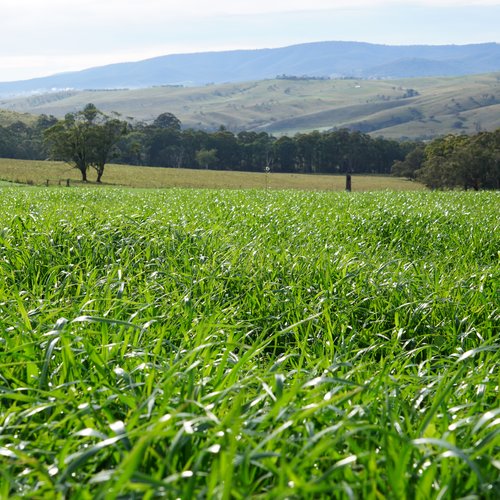
Australian-first cereal solution for crown rot and nematodes

Feb. 18, 2026 | 3 min read
Together, fusarium crown rot and root lesion nematodes are costly, hidden threats that have historically been difficult to manage. This season, wheat and barley growers have access to Victrato seed treatment.

Unlocking the power of biologicals

July 28, 2025 | 3 min read
As growers across Australia face increasing pressures to reduce chemical inputs, improve soil health, and build sustainable production systems, biological solutions are no longer just an alternative — they are becoming essential tools for modern horticulture.

NEM reshaping Australian agriculture with science that listens

July 25, 2025 | 3 min read
Australian farmers face unprecedented challenges: climate variability, soil degradation, and rising input costs. In this evolving landscape, many are turning their attention underground – to the living systems which sustain healthy, resilient crops.

ADAMA adds unique stubble management solution for multiple cropping benefits

July 21, 2025 | 3 min read
Growing crop protection formulation specialist and supplier, Adama Australia, has strengthened its early season portfolio with a new product addressing a key challenge many growers face prior to planting – crop stubble management.

Power of pastures and fodder crops to lower weed numbers

April 29, 2025 | 4 min read
A robust crop and pasture rotation and strong crop competition are very effective strategies in mixed farming operations to keep weed numbers low in grain crops.

Game changer seed treatment hits the market

April 28, 2025 | 3 min read
A decade of Australian development has culminated in a breakthrough for wheat and barley growers, with Victrato seed treatment now registered for the management of devastating Fusarium sp. crown rot.

Groundbreaking endophyte research

March 17, 2025 | 3 min read
DLF Seeds Australian research manager, Martin Harmer, spent four years exploring the nitrogen efficiency benefits of AR37 endophyte and how incorporating it into a pasture system can improve a farmer’s bottom line.

Three C’s of seed treatment spell success

Feb. 20, 2025 | 4 min read
A series of workshops in the north of Australia’s wheat growing regions has helped farmers adopt some useful tactics when applying cereal seed treatments for themselves.

Scientists discover ‘off switch’ in legumes

July 29, 2024 | 3 min read
A genetic off switch that shuts down the process in which legume plants convert atmospheric nitrogen into nutrients has been identified for the first time by a team of international scientists, led by La Trobe University researchers.

Maximising crop success

May 15, 2024 | 2 min read
In the world of agriculture, every advantage counts. Maximising crop yield and uniformity while conserving resources and promoting sustainability is the holy grail for farmers worldwide.

Avoiding seed damage at planting

May 11, 2024 | 3 min read
Better than expected summer rain across key winter crop growing areas has set up a favourable window for 2024 winter crop planting.

Project to optimise nutrition for WA pulse crops

April 15, 2024 | 2 min read
Graingrowers will have access to new fertiliser guidelines to support the successful integration of newly adapted pulse crops into their farming systems through a research project, underway in Western Australia.

Victrato seed treatment to hit market

Feb. 14, 2024 | 2 min read
This winter will mark the beginning of a new era in Australian cereal production, with Victrato seed treatment hitting the market.

NEM fast-tracks sustainable production

Feb. 13, 2024 | 2 min read
In an era of rising awareness about the positive environmental impact of biological farming practices, New Edge Microbials (NEM) has created a convenient twist to the GRDC’s double inoculation research and step towards sustainable agriculture with its innovative legume double inoculation method.

Biostimulant trial boosts almond crop

July 13, 2023 | 3 min read
New trial results demonstrate that Mycorrcin, a biostimulant from Biostart, has been found to increase the size of young almond trees, as well as the amount and weight of both nuts and kernels, while also improving soil biology.