Autumn treatment is critical to control liver fluke
Feb. 24, 2026
|
5 Min read
Autumn treatment with an effective flukicide which controls all three stages of liver fluke ( Fasciola hepatica ) remains the cornerstone of strategic control programs to control this serious parasite of sheep and cattle.
Autumn treatment with an effective flukicide which controls all three stages of liver fluke ( Fasciola hepatica ) remains the cornerstone of strategic control programs to control this serious parasite of sheep and cattle.
Elanco cattle brand manager Kim Krilich says liver fluke can cause significant economic losses through reduced animal health and productivity, and in some cases, death.
“Immature fluke cause significant damage to the liver and blood vessels as they migrate through the liver from the intestines to the bile ducts, where adult fluke feed on blood,” she says.
“Meat & Livestock Australia has estimated liver fluke can cost sheep producers $3.99 per head in lost production and prevention costs in high incidence regions alone.” 1
Reduced liver function and the associated inflammatory response caused by liver fluke infections can significantly reduce feed conversion efficiency, growth rates, milk production and wool production, while blood loss can cause anaemia and ‘bottle jaw’.
Infected livestock are also susceptible to Black Disease and should be vaccinated against Clostridium novyi.
Damaged livers are condemned at slaughter, and this can also be costly.
Liver fluke is a parasitic flatworm which has a complex life cycle requiring a definitive host (e.g. sheep and cattle) and an intermediate host (i.e. Lymnaeid freshwater snails).
While liver fluke is most prevalent in high rainfall (>600 mm) or irrigated regions of NSW, Victoria, southern Queensland and Tasmania 2, infections can occur in other regions where Lymnaeid freshwater snails inhabit during prolonged wet periods or if livestock are introduced from endemic areas.
Strategic control and prevention programs should incorporate regular monitoring for the presence of liver fluke; grazing management to reduce livestock’s exposure to ‘flukey’ pastures; and the strategic application of effective flukicides to reduce both the number of liver fluke in the host and the number of fluke eggs and infective cysts on pastures.
“In areas known to be endemic, livestock should be treated in autumn with a flukicide which has activity against early immature, late immature and adult stages of liver fluke, such as triclabendazole,” Kim says.
“An additional treatment using a different mode of action is also recommended in late winter or early spring,” she adds.
“A mid-summer flukicide drench may also be required for sheep and young cattle to eliminate fluke picked up in late spring and early summer or if they show signs of clinical disease.
“Finally, all introduced or returning livestock should be quarantine treated, particularly if their treatment status is unknown.”
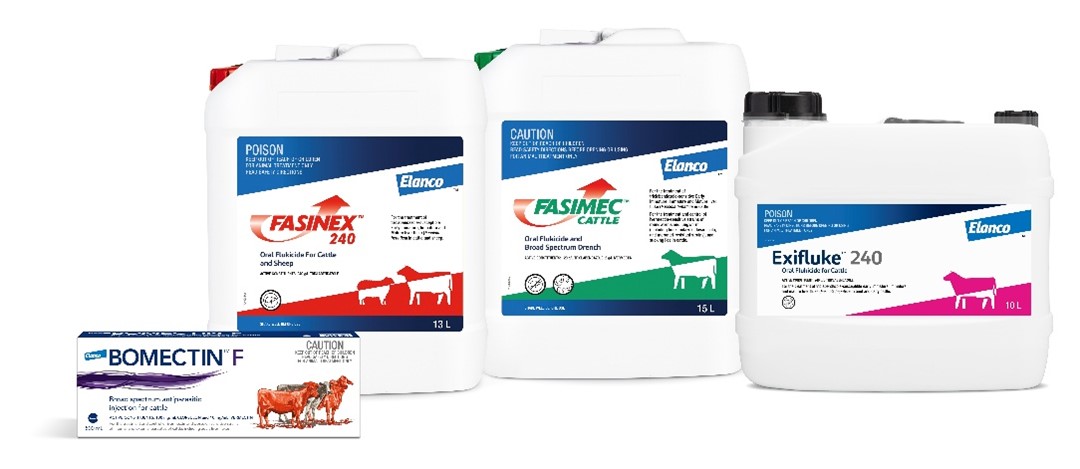
Elanco markets a range of well-known flukicides, including Fasinex 240 (240g/L triclabendazole), Exifluke 240 (240g/L triclabendazole) and Fasimec Cattle (120g/L triclabendazole and 2g/L ivermectin).
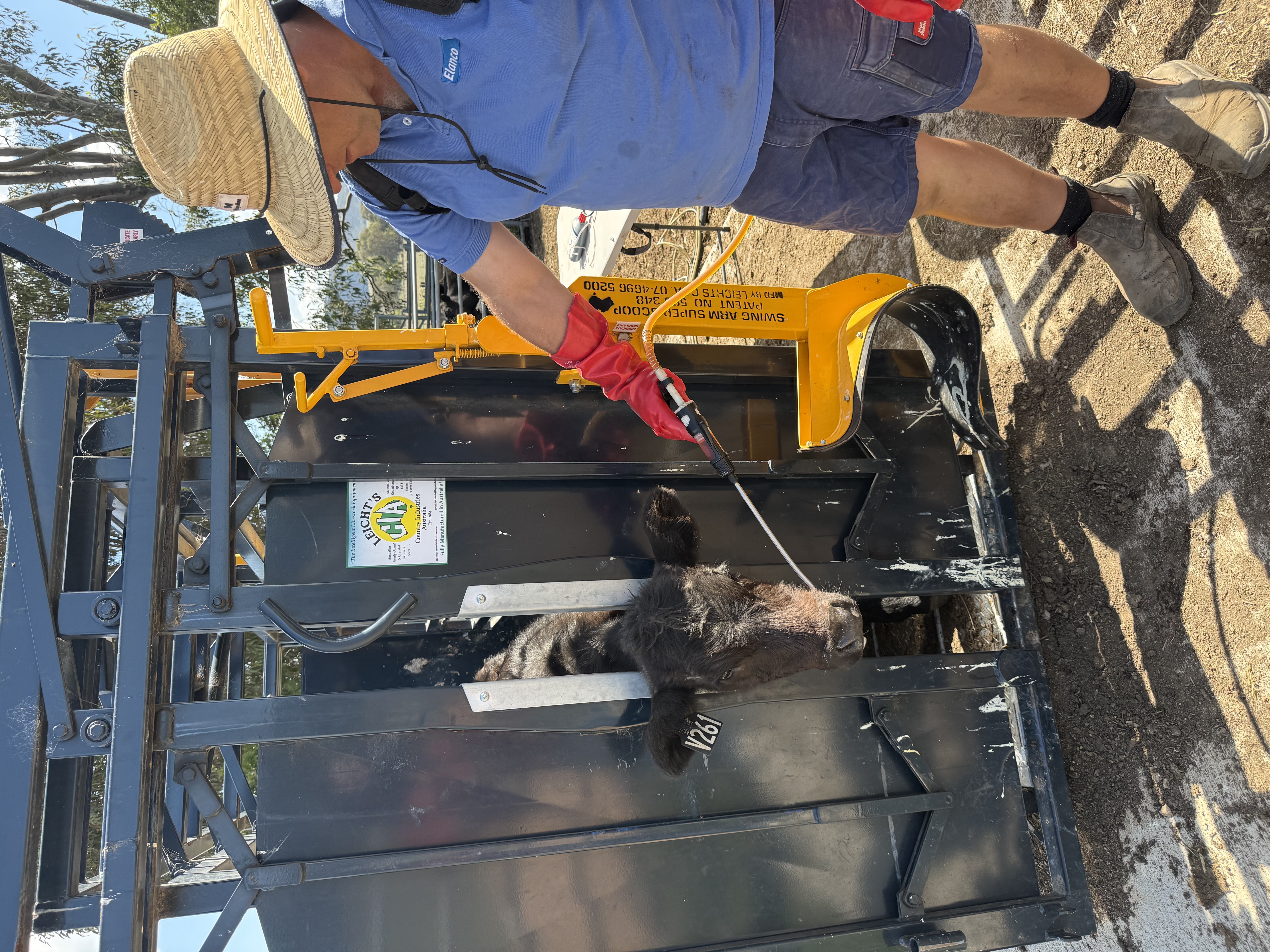
These oral treatments are particularly suitable for use during autumn or as part of a quarantine drench as they control all three stages of triclabendazole-susceptible liver fluke.
“Fasinex 240 is registered for use in both sheep and cattle, making it suitable for use in mixed livestock enterprises, and has a low dose rate of 2.5 mL per 50 kg body weight for cattle and 0.5 mL per 10 kg body weight for sheep,” Kim says.
“Exifluke 240 also has the same low volume dose rate but with the flexibility of a 14-day meat withholding period.
“Fasimec Cattle provides broad spectrum control of triclabendazole-susceptible liver fluke and ivermectin-sensitive gastrointestinal roundworms, lungworm and sucking lice.
“It has a dose rate of 5mL per 50kg body weight."
Strategic control and prevention programs should incorporate the strategic application of effective flukicides to reduce the number of liver fluke in the host and the number of fluke eggs and infective cysts on pastures.
Elanco also markets Bomectin F, an injectable formulation of 100g/L clorsulon and 10g/L ivermectin for use in cattle.
“Bomectin F is suitable as a late winter or early spring treatment to target adult fluke and as a rotation partner for triclabendazole-based treatments,” Kim says.
“It has a nil milk withholding period, making it suitable for use in lactating dairy cows, and has a low volume dose rate of 1mL per 50kg body weight.”
Contact your local Elanco representative for advice about managing liver fluke in sheep and cattle.
Always read and follow label directions. Good agricultural practice is essential for optimal fluke control.
References: 1. Shephard, R. et al. (2022) B.AHE.0327: Priority List of Endemic Diseases for the Red Meat Industry - 2022 update. 2. Boray, J.C. (2017). Liver fluke disease in sheep and cattle. Primefact 446, NSW Department of Primary Industries. https://www.dpi.nsw.gov.au/__data/assets/pdf_file/0004/114691/liver-fluke-disease-in-sheep-and-cattle.pdf Accessed 23 Oct 2025.