Achieving top citrus quality from trees which are effectively grown on a quarry means a lot of attention to detail for Nutrano Produce group farm manager Thomas Braybrook.
Achieving top citrus quality from trees which are effectively grown on a quarry means a lot of attention to detail for Nutrano Produce group farm manager Thomas Braybrook.
Hailing from the Mundulla area in South Australia, Thomas is in charge of the Group’s 450ha Sunraysia property, as well as a new 770ha development nearby, and has built up strong experience in the region for more than a decade.
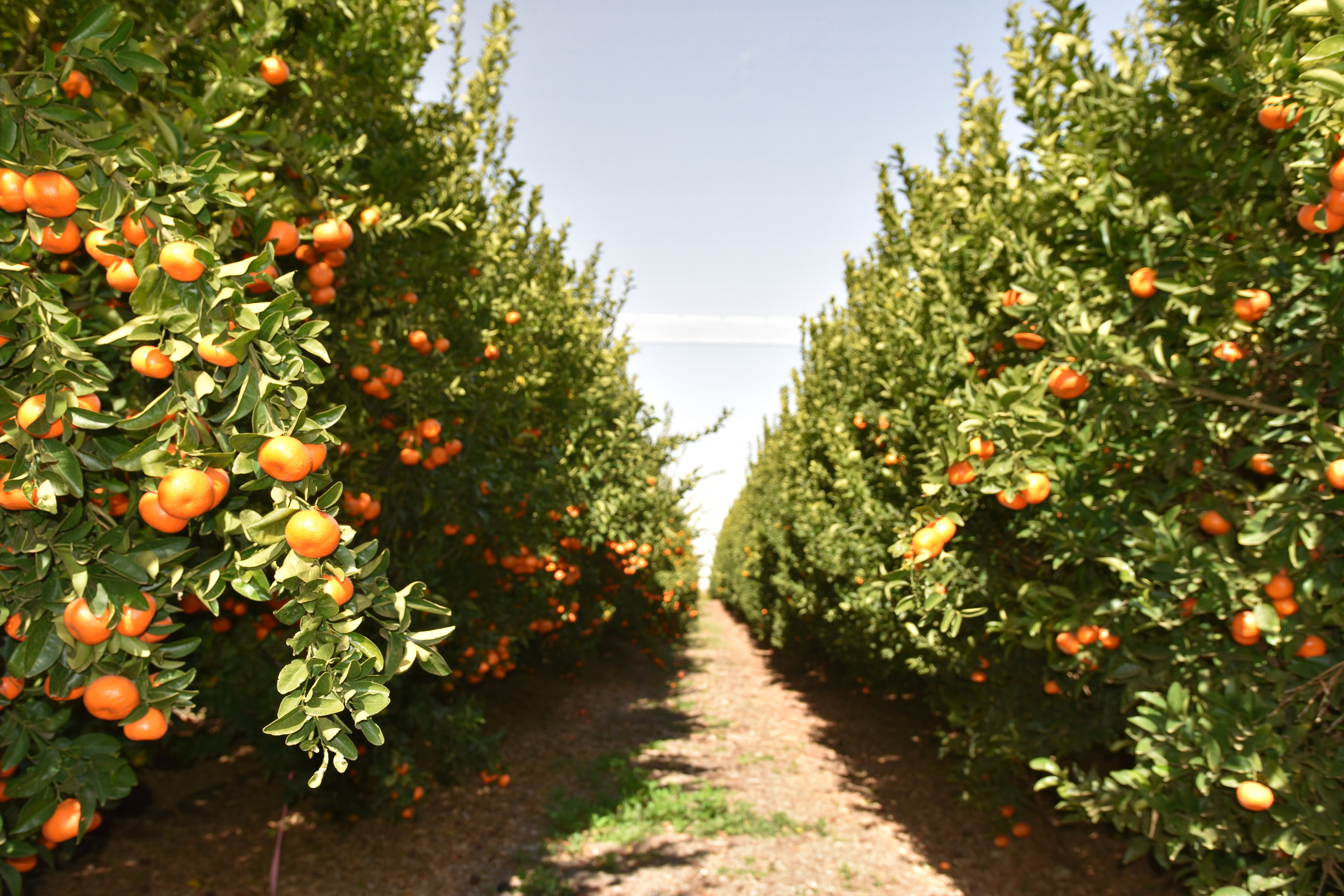
Sunwest comprises early to late season navel orange and easy-peel mandarin varieties, plus some lemons and grapefruit, that are grown on limestone before being packed and exported to Europe, Asia and the US through the company’s complete supply chain.
The challenging conditions have seen operations continue to intensify, to the point where, as Thomas describes, it has largely become hydroponic growing, while latest use of upcoming technologies and artificial intelligence (AI) tools is set to help achieve further gains.
“Tree management is the biggest part to yield management and if they are not managed properly and fed, watered and given a haircut, production will come off,” Thomas says.
“The use of latest tech, including fruit counts and measurements, is about getting more consistent with production,” he says.
“And it can help iron-out the big discrepancies.
“An additional 2 per cent growth can result in an extra 10 per cent yield.
“Fruit size starts at about 3mm and you can look at a growth curve, with a target of achieving 70mm at the end.”
However, as for many growing enterprises, there are the traditional challenges which are harder to manage, including labour, weather events such as hail and frost, and the cost of water.
Many of the Sunwest trees are also grown under netting, creating its own microenvironment and, in turn, further challenges including higher pest pressures.
Water is pumped more than 12km from the Murray River to a holding dam on the property, which also is used by other local growing operations.
Sunwest uses central point irrigation and while scheduling is dependent upon the weather, it can run 24 hours a day during summer and fertigation programs run consistently from August through to February.
Programs also are supported by six to eight foliar applications of nutrients through the growing season.
Soil and leaf sampling is undertaken twice each season to help guide programs, which focus on crop replacement requirements and continual adjustments according to each crop and block.
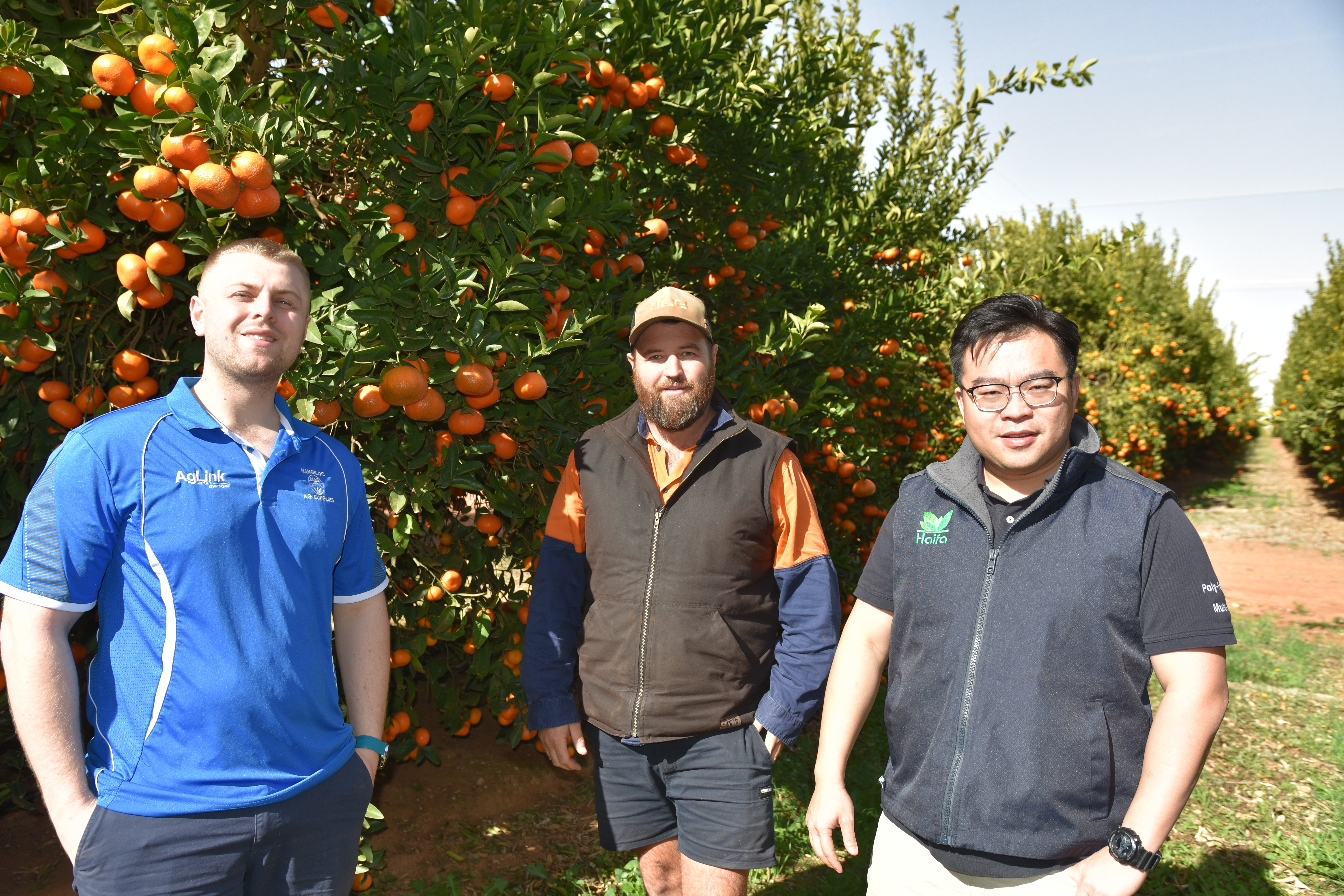
Brayden Long, Nangiloc Ag Supplies, Nutrano Produce Group farm manager Thomas Braybrook and Haifa Australia southern sales agronomist Poh Chong, take a closer look at mandarin development on Nutrano’s Sunraysia property.
Fertiliser rates can be varied through the central point system to suit the requirements of each block.
Thomas says the Sunwest team conducts its own trials with fertilisers on the property before adopting them if they produce good results.
Sourced through Nangiloc Ag Supplies, Haifa fertilisers have been some of the products favoured, particularly for their high quality and related easy mixing and compatibility traits.
Biological treatments are also being incorporated, including seaweed application on trees.
“We have had some problems with other poor products,” Thomas says.
Sunwest has been a high user of Haifa’s Multi-K potassium nitrate, it applies the company’s Bonus foliar potassium product four to six times per season, and it prefers Haifa’s EDDHA chelated iron micronutrient over other iron products.
“We did trial and test a couple of products and they were no good,” Thomas says.
“One was dusty and another didn’t mix,” he explains.
“We have been using the Haifa iron for about 18 months and it has been better to mix and we have seen good results – and the buckets it comes in adds a benefit for ease of use.
“We remember one application, we had yellow leaves on the trees, and it turned the farm around. We noticed a significant change in the colour of the trees over a short period.”
Haifa’s iron chelate offers 6 per cent iron and, more importantly, is the most stable in soils, with an ortho-ortho (stability) percentage of 5.2.
The higher ortho-ortho level ensures more efficient use of the nutrient and improved production and quality, especially in high pH soils.
Thomas says they have a strong focus on soil health and will continue to tailor their program, including with the use of biostimulants, into the future and with the support of Nangiloc Ag Supplies and citrus consultants.