Discovery could lead to more reliable mungbean yields
Jan. 2, 2026
|
5 Min read
New breeding opportunities for an important cash crop have been unlocked by University of Queensland and Grains Research and Development Corporation (GRDC)-supported research.
New breeding opportunities for an important cash crop have been unlocked by University of Queensland and Grains Research and Development Corporation (GRDC)-supported research.
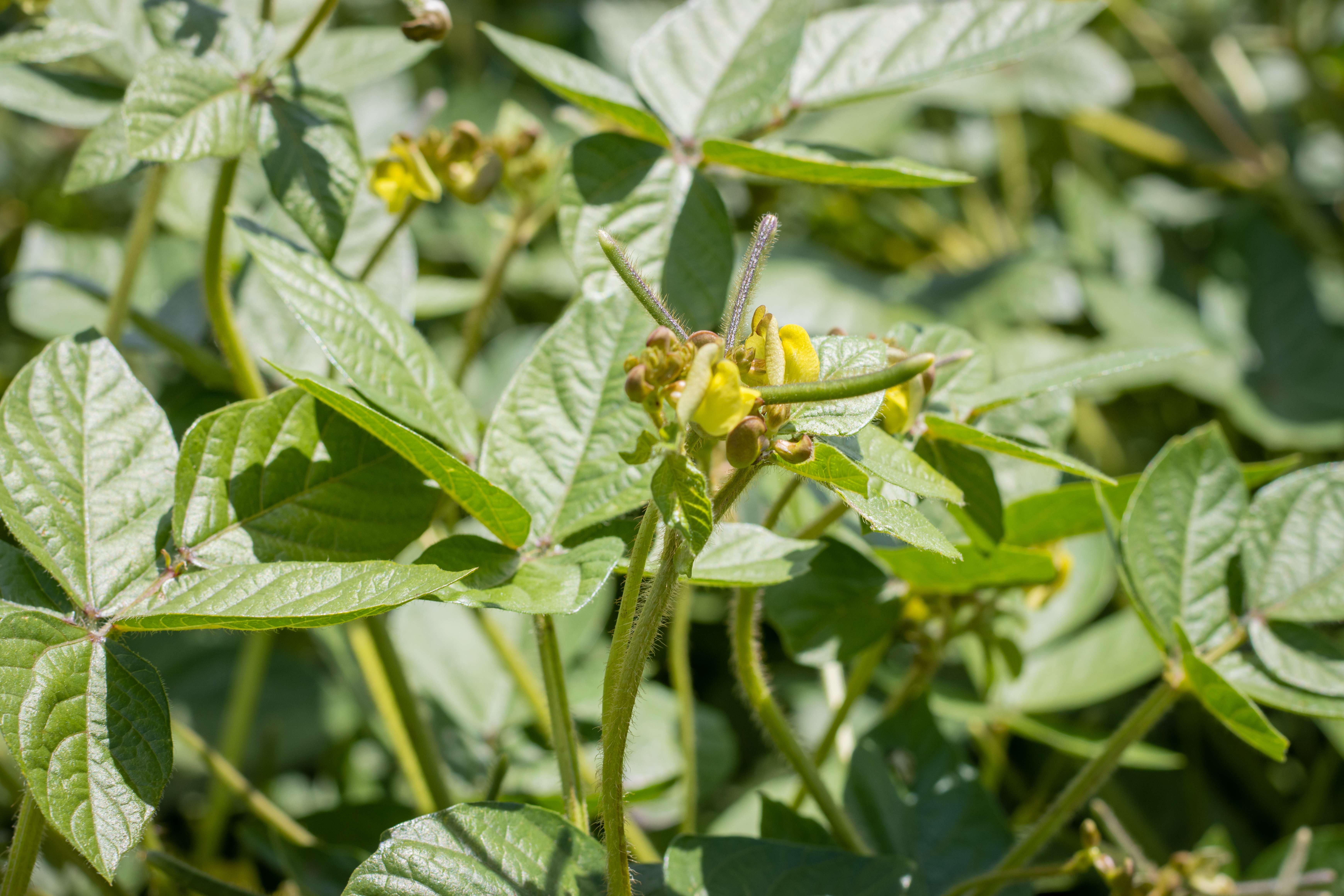
Queensland Alliance of Agriculture and Food Innovation PhD candidate Caitlin Dudley has revealed key insights about mungbean flowering through extensive field trials.
“Our research found when mungbean flowers, and how long it flowers, are independent traits with distinct genetic controls,” Cailtin says.
“That’s important to know because it opens opportunities for breeders to optimise flowering time to improve yield for specific growing environments,” she says.
"Think of it like having two separate dials instead of one.
“We can now potentially adjust flowering time to avoid heat or drought stress without affecting how long the plant flowers."
The discovery addresses a major challenge for mungbean production.
Currently, Australian farmers achieve yields of 0.5-1.5 tonnes per hectare, with the industry targeting 2t/ha.
“Mungbean's unpredictable flowering makes it vulnerable to stress and complicates mechanical harvesting, increasing risk to growers,” Cailtin explains.
“Understanding the controls of flowering opens opportunities for targeted breeding to increase yield reliability across different growing environments,” she says.
The research team has screened more than 2000 diverse mungbean lines across four field trials in Queensland, revealing substantial genetic variation for both traits.
Caitlin’s supervisor Dr Millicent Smith says the findings have significant implications for crop improvement.
“This is the first time anyone has demonstrated these flowering traits operate independently in mungbean,” Millicent says.
“Our work provides breeders with future targets as we've identified 8 genetic regions controlling flowering time and 1 controlling flowering duration, with no overlap between them,” she adds.
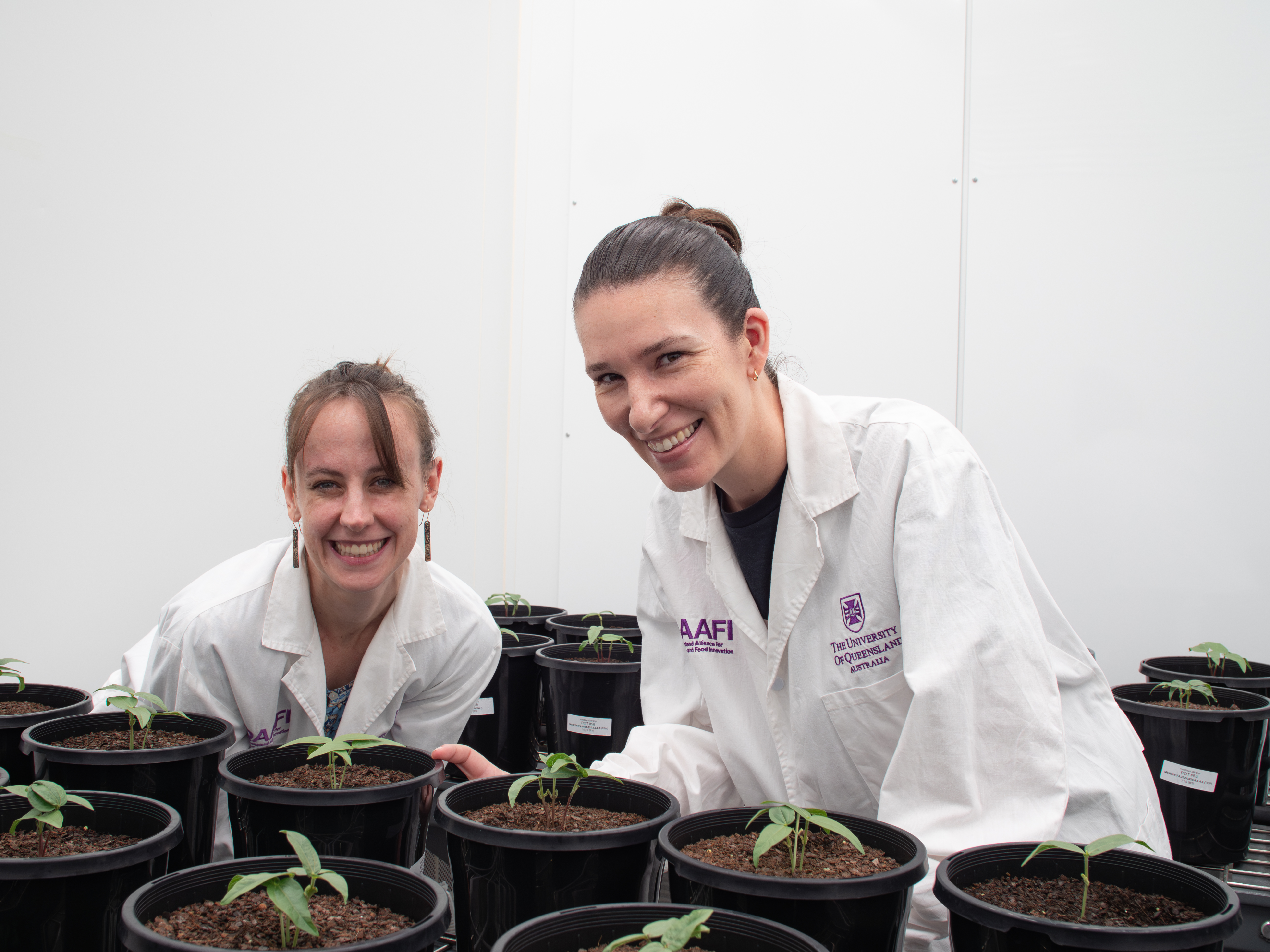
PhD candidate Caitlin Dudley and her supervisor Millicent Smith.
“This means we are now a step closer to further varieties which flower at optimal times for specific regions while independently controlling how synchronised that flowering is as we get closer to harvest.”
The UQ research has global significance beyond Australia's mechanised farming systems.
“We collaborate with the International Mungbean Improvement Network, so we hope this work can help create more reliable crops for smallholder farmers in Asia and Africa where mungbean is harvested by hand,” Cailtin says.
The project represents years of dedicated fieldwork and data collection by a large team across variable Queensland growing seasons.
“That eureka moment is much more rewarding when you are working as a team and it’s exciting to realise the importance and impact these results could have,” she says.
Millicent says the research opens new avenues for improving mungbean adaptation to climate variability.
“Looking ahead, we can extend this work to understand how these genetic controls interact with temperature and water availability,” she says.
“We're also exploring what's unique about mungbean by comparing it to closely related species and other legumes like soybean.”