Bayer Technical Solutions agronomists have continued to undertake trials with the company’s pre-emergent and early post-emergent (EPE) herbicide, Mateno Complete, and, similar to independent trials, have confirmed its EPE application is the industry benchmark for annual ryegrass control.
Bayer Technical Solutions agronomists have continued to undertake trials with the company’s pre-emergent and early post-emergent (EPE) herbicide, Mateno Complete, and, similar to independent trials, have confirmed its EPE application is the industry benchmark for annual ryegrass control.
Mateno Complete contains aclonifen, pyroxasulfone and diflufenican, and its use EPE, following an effective pre-emergent herbicide, helps achieve improved and extended control across the entire soil surface, including of weeds in the furrow.
“There are various strategies that can help manage your weed seedbank, including harvest weed seed control, good crop competition, optimised spray application and the use of knockdown herbicides pre-plant, but it’s critical to keep the weed seedbank as low as possible at all times without letting up,” Bayer WA based northern agricultural technical solutions agronomist Matt Willis says.
In the past five years, Matt has coordinated a dozen trials throughout the northern region and the EPE application of Mateno Complete, compared to other herbicides and tank mixes applied by farmers following pre-emergent use of trifluralin, has achieved an average 5 per cent increase in annual ryegrass control compared to the next best performing treatment.
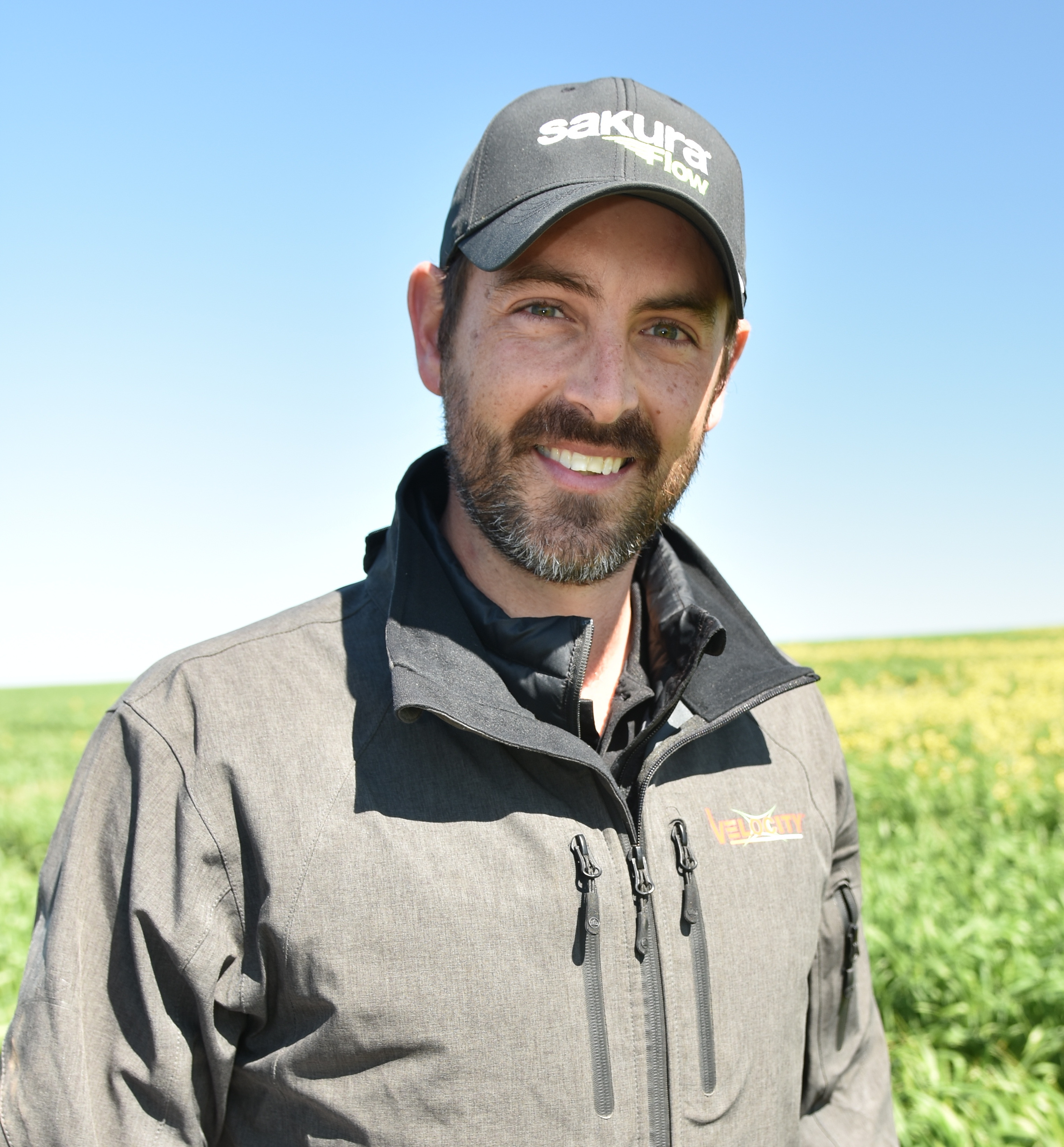
Matt Willis
“Mateno Complete EPE following trifluralin recorded an average 90.4 per cent reduction in ryegrass panicles across all the trials, compared with 85.2 per cent for a typical on-farm herbicide tank mix which does not contain aclonifen applied EPE,” Matt says.
“Application of Boxer Gold or Arcade EPE following trifluralin both achieved about 82.5 per cent reduction in ryegrass panicles across these trials.”
He says the combination of the three active ingredients in Mateno Complete, and particularly the aclonifen component, was responsible for the 5 per cent improved control.
“The pyroxasulfone in Mateno Complete provides a very high level of annual ryegrass control with lengthy residual activity, but the aclonifen provides multiple pathways of herbicide uptake and so adds robustness to that initial control, particularly when conditions at application are not perfect,” Matt adds.
“Pyroxasulfone has to be washed-in by rainfall and taken up by plant roots and ideally needs to be moved 1-2cm down the soil profile, below germinating weed seeds,” he says.
“By itself, there is a risk of weeds getting too big prior to activation by this rainfall. Aclonifen uptake is a combination of foliar and root uptake.
“After application, it will sit on the soil surface and be taken up by emerging ryegrass shoots, providing that extra robustness for control.”
Matt says achieving 5 per cent less control with other herbicides and tank mixes applied EPE is effectively allowing 50 per cent more weed seeds to get through to the weed seedbank – and this was what the aclonifen was preventing.
“In an untreated scenario, as an example, there might be 1000 ryegrass panicles per square metre, and whereas the Mateno Complete EPE treatment is allowing 100 to get through in this case, the on-farm herbicide tank mix treatments are letting 150 of them through – 50 extra panicles,” Matt explains.
“So, the Mateno Complete is reducing the seedbank and providing that benefit for future cropping seasons,” he says.
Where broadleaf weeds featured in populations with annual ryegrass, the improved weed control provided by the aclonifen in Mateno Complete then increased considerably.
“The combination of active ingredients delivers a complementary benefit, so when targeting problem broadleaf weeds such as wild radish, the aclonifen and diflufenican really becomes a case of one plus one equals three,” Matt says.
“The performance of Mateno Complete on broadleaf weeds can sometimes be underestimated due to the focus on grasses, but it has shown consistently how strong it is in the field,” he adds.
“Tank mixes applied EPE would require a broadleaf herbicide to be included, adding cost and also the potential for increased crop phytotoxicity.
“As a result of the excellent broadleaf weed control benefit with EPE applications of Mateno Complete, there have also been many cases where growers have not had to undertake another broadleaf herbicide application.”
Matt says, importantly, the aclonifen is also offering a different herbicide mode of action for early season grass and broadleaf weed control, effectively taking the pressure off other commonly used herbicides.
Meanwhile, ongoing independent, showpiece trials coordinated in WA, investigating the best upfront herbicide strategies put forward by crop protection companies against annual ryegrass, have once again underlined the EPE Mateno Complete application as the best strategy to achieve optimum annual ryegrass control.
The EPE application of Mateno Complete following pre-emergent use of trifluralin resulted in significantly improved annual ryegrass control and yield gains compared to the industry standard application for ryegrass control, involving a tank mix of trifluralin and Sakura pre-emergent herbicides.