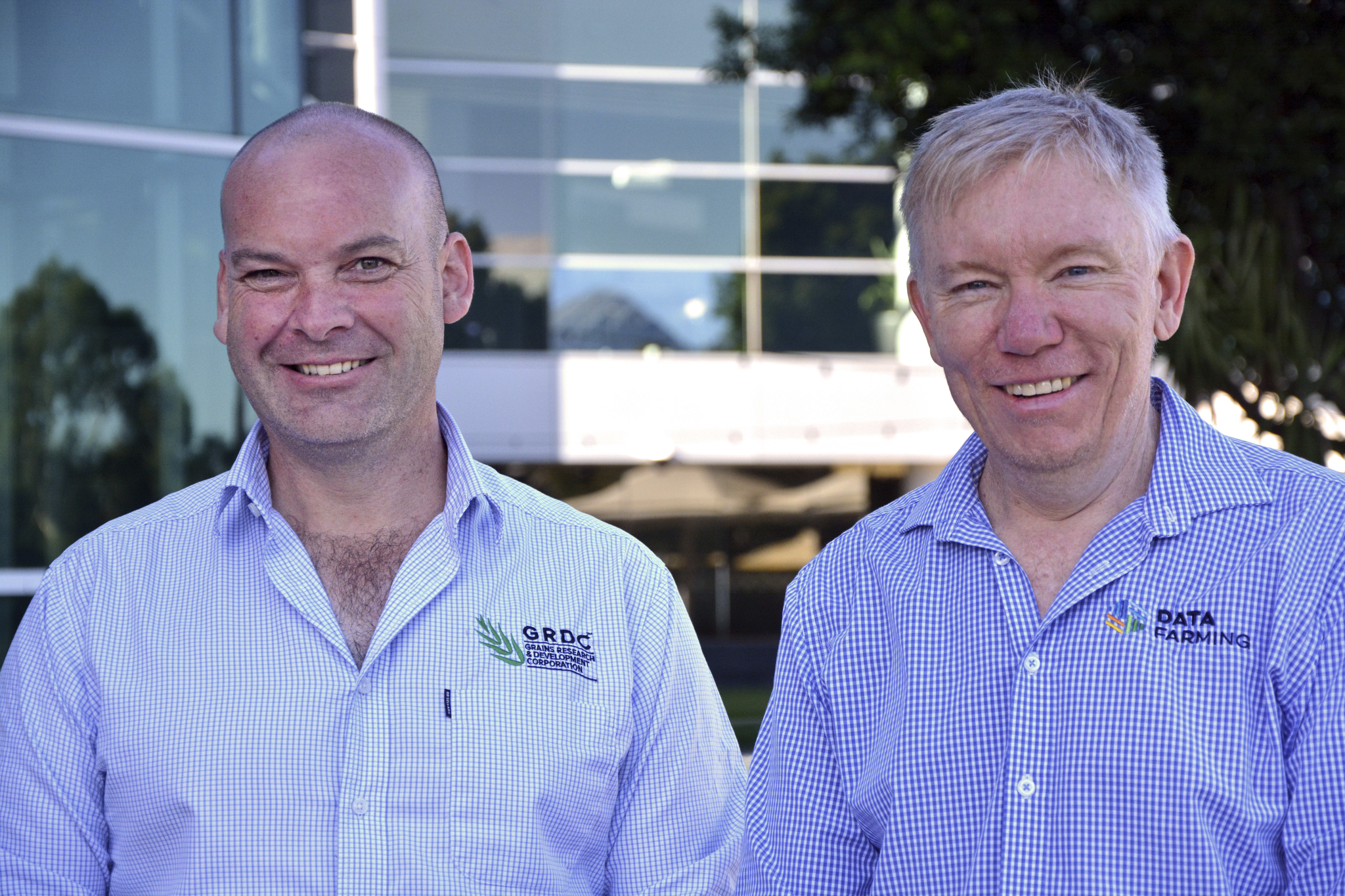
A Grains Research and Development Corporation (GRDC) project has now delivered an innovative weed detecting system for common boomsprays, with the potential to reduce herbicide use by as much as 80 per cent.
This research began in 2023 after GRDC identified an opportunity to make precision spraying more easily accessible through the use of new high resolution satellite imagery.
Toowoomba-based ag tech provider DataFarming had also been considering the value of the satellite data and agreed to develop a solution.
The project saw the company work with University of Sydney analysts to develop algorithms that identify weeds within the images and integrate GPS paddock boundary data from growers.
DataFarming managing director Tim Neale says the new WeedSAT technology system could help cut the cost of fallow weed management.
“Large, hard-to-kill weeds represent a very small percentage of the total paddock area but a significant per-hectare chemical cost,” Tim says.
“Targeted spraying of these weeds is where the technology delivers the greatest value,” he says.
“The WeedSAT algorithms identify weeds and add a buffer area to ensure proper coverage by the sprayer, then the spray application map is provided to the grower.
“Even with the buffer, the system saves growers from spraying around 80 per cent of their total paddock area.
“Most importantly, the system can be used on any boom sprayer with section or individual nozzle control. We estimate that includes about 90 per cent of the sprayers on farms today.”
As part of the R&D investment, the technology has been tested on more than 120 paddocks across all growing areas of Australia, covering more than 12,000ha.
This includes gathering high resolution drone imagery of select areas to train the University of Sydney’s machine learning model and ground-truth the analysis.
Western Australian precision agriculture consultant Bindi Isbister has worked alongside several clients to help test, ground-truth and operate the new technology in the paddock.
She says it is important for growers to understand the weed and timing issues they need to address.
A drone or boom-camera system would be better for small weeds or green-on-green spraying, for example.
However, she says WeedSAT is a good option for growers who want to use their current boomsprays to start spot spraying – especially for large summer weeds.
“The system’s real strength is green-on-brown summer weed control, and that’s where we’ve seen it get better and better,” Bindi says.
“Even clients who have selected a more conservative weed detection threshold, increasing the mapped spray area as the model attempts to capture more potential weeds (with a higher chance of misfires), have only needed to spray eight per cent of their total paddock area,” she says.
She compares a benchmark herbicide cost of $20 per hectare with DataFarming’s $7 per hectare fee for image acquisition, analysis and prescription processing.
“If you’re only spraying 8 per cent of your paddock, that’s a huge saving which makes it more affordable to use high application rates for a sure kill on difficult, established weed patches.”
Bindi has also been impressed by DataFarming’s commitment to helping growers troubleshoot data issues and get the system working with older screens and sprayers.
“In one case where the spray prescription was too large for the grower’s screen, they helped identify the issue and split the file into three so it would work on that sprayer,” she says.
GRDC agtech investment manager Peter Thompson says the corporation’s primary investment aim is to support the 70 per cent of growers who have not invested in optical boom mounted systems yet could leverage existing investment in their current boomspray equipment.
“WeedSAT doesn’t replace those systems but, given they can cost upward of $150,000, we saw great value in developing an easily deployed technology to reduce the cost and amount of herbicide used on the majority of farms,” he says.
“Large summer weeds use soil moisture at a high rate, so eliminating them efficiently and cost-effectively will have flow-on benefits for crop establishment and development.”