Consistent control of grass weeds across indifferent seasons, including of herbicide-resistant types, and wider benefits for entire cropping systems is continuing to raise the profile and justify grower investment in a specialist pulse crop herbicide.
Consistent control of grass weeds across indifferent seasons, including of herbicide-resistant types, and wider benefits for entire cropping systems is continuing to raise the profile and justify grower investment in a specialist pulse crop herbicide.
Ultro contains a novel herbicide mode of action (Group 23) and it is being targeted for use in pulse crops, where it is consistently achieving higher levels of grass weed control than many industry standards.
The pre-emergent herbicide can be used in faba beans, lentils, field peas, chickpeas, lupins, vetch and broad beans across Australia, as well as in winter fallow.
Glyphosate and clethodim-resistant grass weeds are posing problems for various southern Australian growers, however Ultro is now taking the pressure off some traditional herbicide options and is helping to clean-up paddocks for future crops.
Meanwhile, in Western Australia, many growers have particularly targeted the use of Ultro pre-emergent herbicide in lupins as an alternative to propyzamide applications for ryegrass, brome and barley grass control due to its robust efficacy and significant benefits for their whole farm weed management plans.
Putting a focus on the whole farming system benefit from each year’s weed control is becoming more recognised.
Andrè Sabeeney
Using Ultro within the pulse phase of crop rotations is benefiting following cereal crops and, thereby, enhancing its cost-effectiveness.
The early weed control with Ultro allows improved crop competition against weeds, while excellent root pruning on the later remaining grasses assists the effectiveness of post-emergent selective herbicides.
Adama Australia SA based market development manager Andrè Sabeeney says Ultro has been used especially in high value lentil crops, which also generally provides reduced competition against weeds, as well as in some faba bean and field pea crops.
He says he considered it the ideal pre-emergent herbicide for use in pulse crops.
“What’s been impressive is that Ultro has delivered some of the most consistent results in control despite the extremes we have experienced in seasons over the last couple of years,” Andrè says.
“It has just been so much more consistent than the alternatives used in these cropping systems and that has been a real benefit,” he says.
Ultro’s high water solubility compared with other herbicides allowed it to perform extremely well in the dry conditions last season and it offered good persistence, which took some pressure off and enabled better efficacy from post-emergent clethodim treatments.
“The mix of a good, robust pre-emergent such as Ultro, followed by an effective post-emergent grass weed herbicide, helps reduce seedset and delay the development of herbicide resistance,” Andrè says
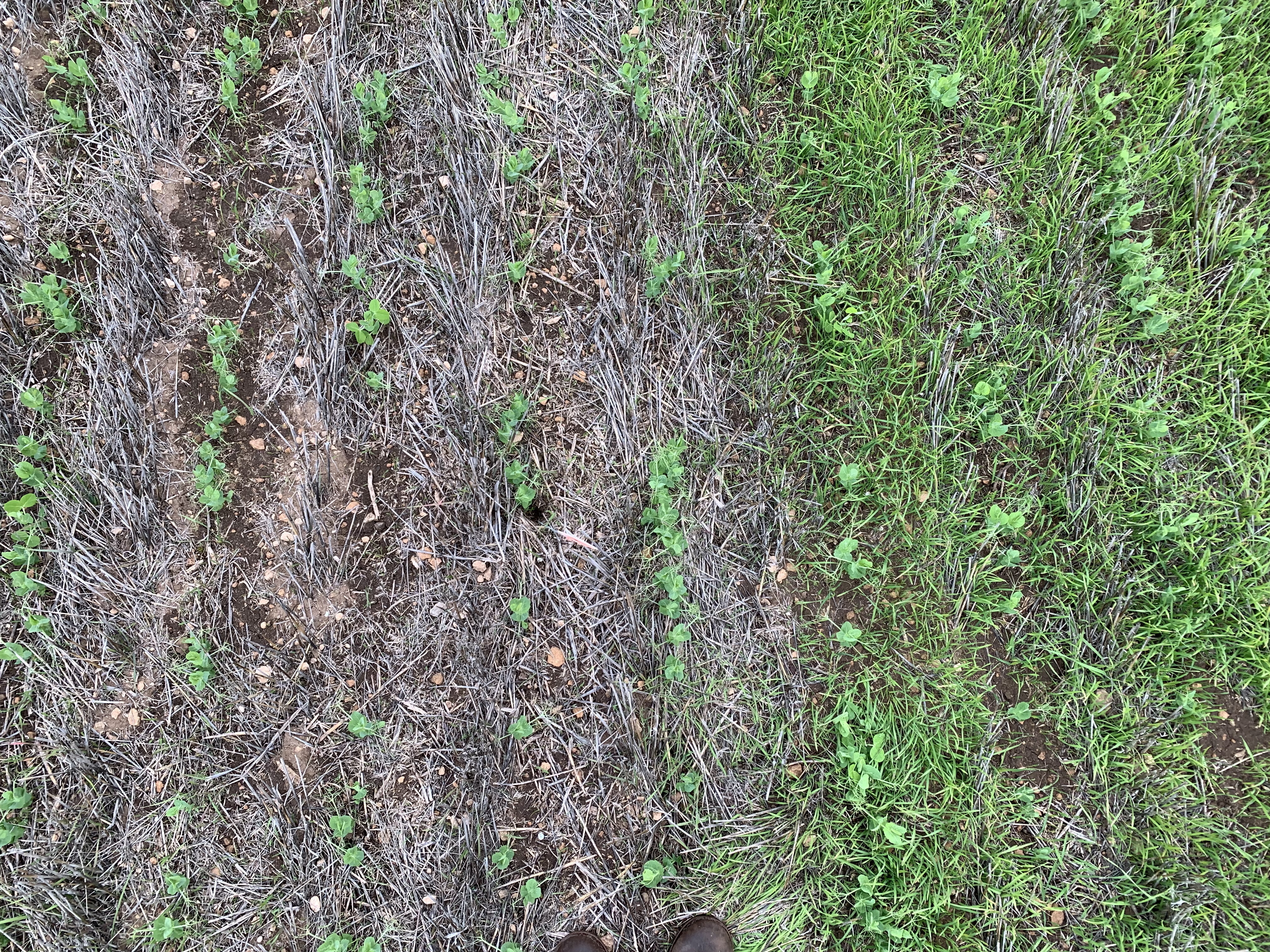
In a grassy paddock near Kadina in South Australia, the excellent weed control in field peas provided by Ultro pre-emergent herbicide is shown on the left, compared with an untreated area on the right
“Ultro controls most annual grass weeds, it’s not broken down by sunlight, it moves off stubble well and it offers good length of control provided the appropriate rate is applied according to soil type, with higher rates used on heavier paddocks,” he adds.
Adama’s WA market development manager Bevan Addison says after recognising the benefits of Ultro for grass control in their pulse crops and for their broader cropping system, growers were now driving its use and rate of application, with higher rates tending to be used on heavier soil types.
“Ultro has become an invaluable tool within whole farm weed management and crop rotation programs, significantly reducing annual ryegrass panicle numbers and seed set for subsequent cropping,” Bevan explains.
“It achieves earlier control of weeds – many simply don’t come out of the ground – and this also reduces root disease build-up for following seasons,” he says.
Bevan adds with regulatory changes looming around the removal of paraquat registration for crop-topping applications, it becomes even more critical to have a robust product such as Ultro which aids in keeping panicle numbers to a minimum and thus reducing seed set for following years.
“In recent years, Adama has been developing new label claims which broadens the use pattern and weed spectrum. These new uses have been submitted to the APVMA, pending approval,” Bevan says.
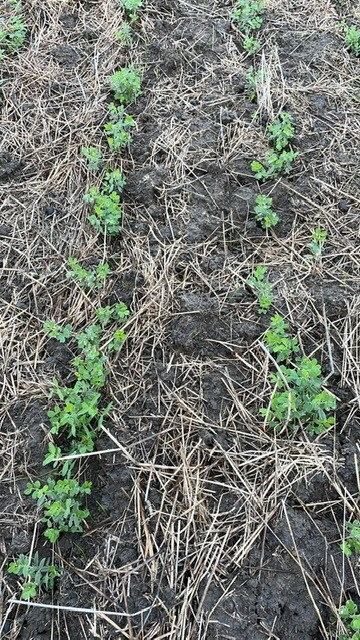
Grass-free lentil crop establishment following application of the pre-emergent pulse crop herbicide, Ultro, in the Wycheproof area of Victoria, where applications with simazine and Spraytop have performed well.
At Kadina in SA, AW Vater & Co agronomist Zack Zweck says various growers have used Ultro in combination with Reflex pre-emergent herbicide and achieved good success.
“It has controlled early ryegrass and brome grass, allowing for delayed in-crop grass sprays. It has also helped the in-crop grass sprays work better,” Zack says.
At Wycheproof in Victoria, Elders agronomist Roy Daykin points out Ultro applications with simazine and Spraytop had performed well in numerous instances.
“Feedback from growers in recent seasons has been very positive, with good control of ryegrass, including ryegrass with suspected resistance to glyphosate. It has taken a great deal of pressure off Group 1 post-emergent chemistry,” Roy says.
“The solubility of carbetamide (the active ingredient in Ultro) compared with propyzamide seems to fit our dryland programs better,” he says.
For further information on the use of Ultro herbicide in pulse crops, growers can contact their local Adama Australia representative or visit adama.com