Cotton growers continue to express extremely positive feedback regarding Adama Australia’s RX-380 concentrated growth regulant that offers significant benefits for farm logistics and storage, as well as reduced packaging.
Cotton growers continue to express extremely positive feedback regarding Adama Australia’s RX-380 concentrated growth regulant that offers significant benefits for farm logistics and storage, as well as reduced packaging.
RX-380 contains ten times the concentration (380 g/L) of the active ingredient, mepiquat, as contained in standard industry 38 g/L formulations of the popular cotton growth regulant.
RX-380 was launched by Adama for the 2021/22 season, replacing Reward which contained 38 g/L of mepiquat.
Jim O’Connor, the company’s market development manager in Queensland, said RX-380 can be applied at a number of growth stages, from squaring, flowering and cut-out, to help modify fruiting and vegetative growth.
Jim said a wide application rate range can be used throughout these stages, from 25 mL/ha up to 200 mL/ha.
He said softer seasonal conditions combined with higher moisture levels, as well as higher fertility and specific management practices, can result in excess vegetative and rank cotton growth, however growers and agronomists now had an easy option to influence node growth.
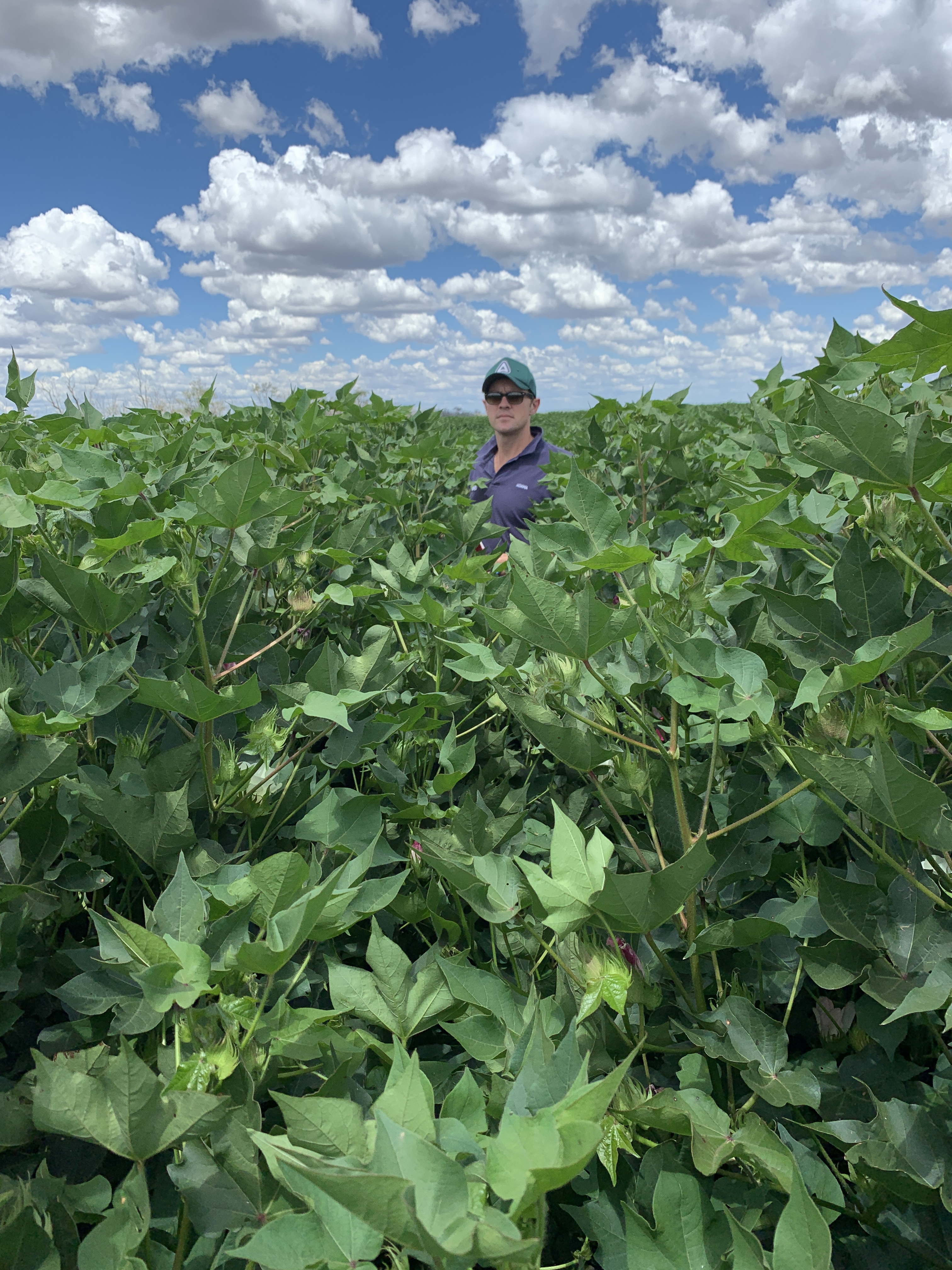
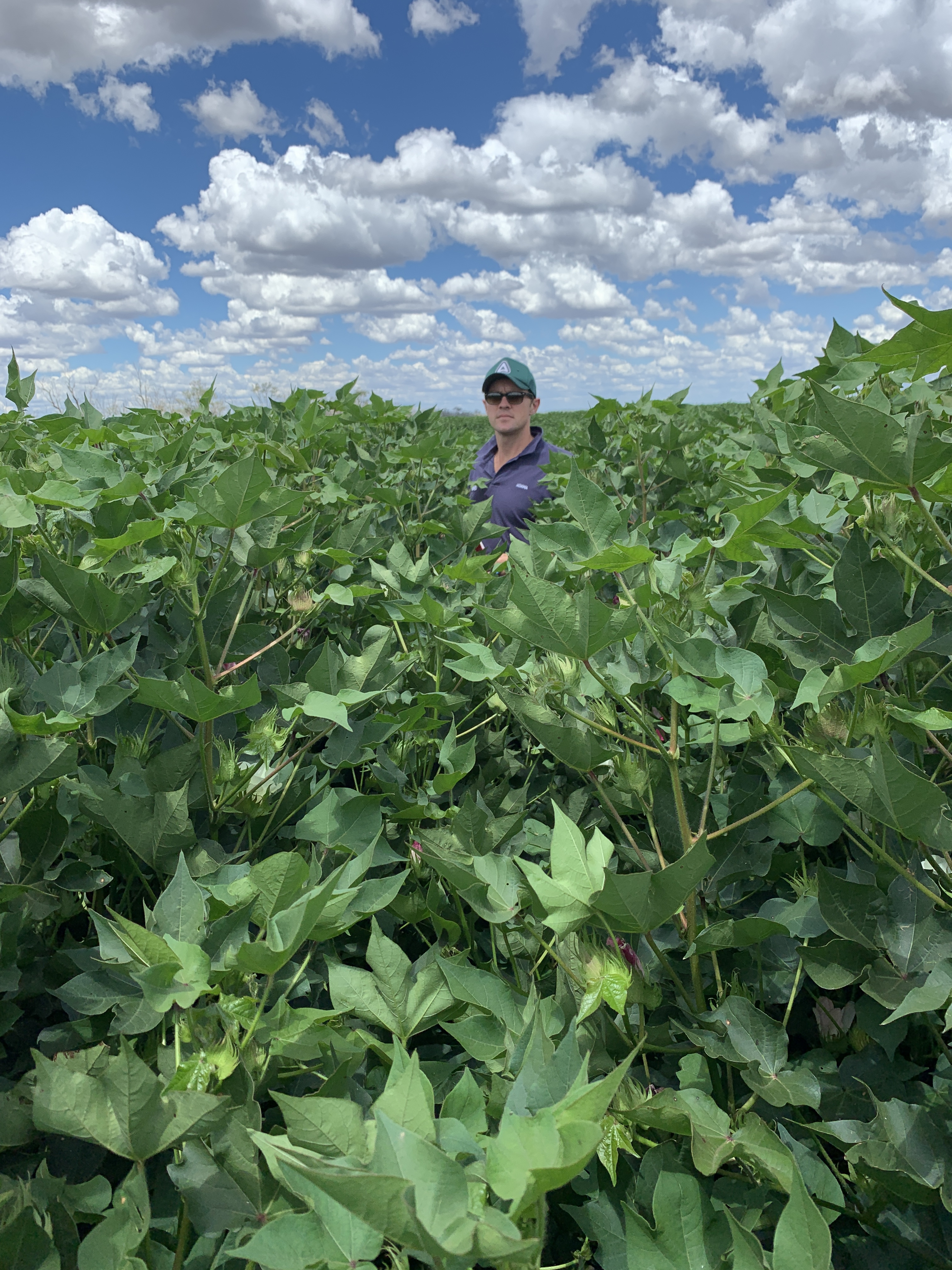
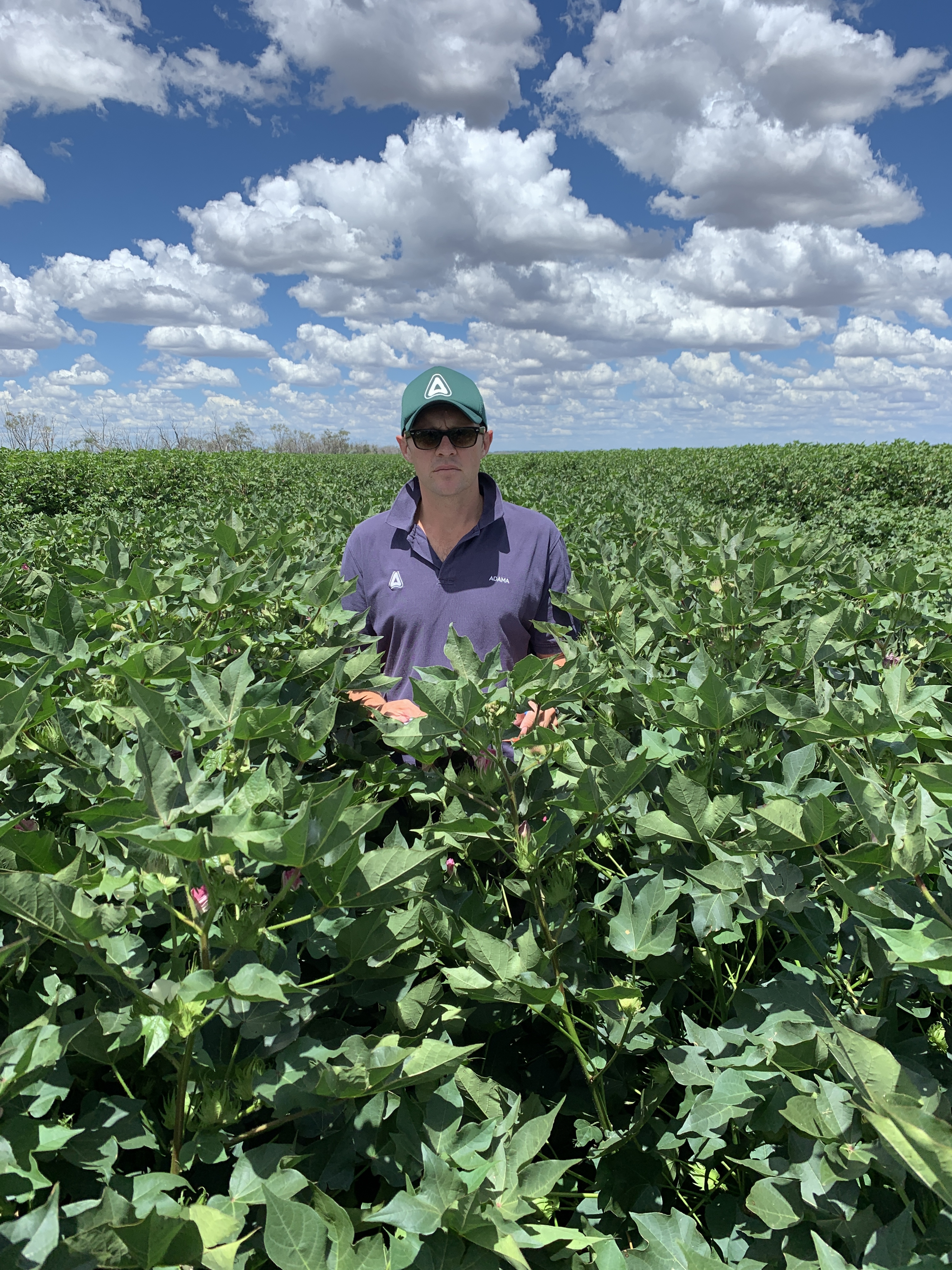
Adama Australia’s portfolio manager, Robert Lomman pictured in an untreated area of a cotton trial.Regulated cotton crop growth following an application of RX-380 at 100 mL/ha at flowering in the trial.
“They may have a certain crop height idea, internode distance or nodes above white flower (NAWF) parameters upon which they then decide to intervene and can regulate with RX-380,’’ Jim said.
“At the top rate of 200 mL/ha with RX-380, that was equivalent to 2 L/ha when using 38 g/L formulations, so one drum of RX-380 will go a lot further. Plus there are benefits with transport, handling, storage and reduced packaging.’’
During its development phase, RX-380 was included in side-by-side trials with Reward, investigating its performance in different situations and at various rates.
Large-scale trials with several growers provided further testing in field situations, all of which attracted positive feedback.
Additional trials were conducted in case RX-380 was accidentally applied at Reward rates in the field. These showed even when RX-380 was applied at ten times the rate, equivalent to the labelled Reward application rate, commercially acceptable yield outcomes could still occur.