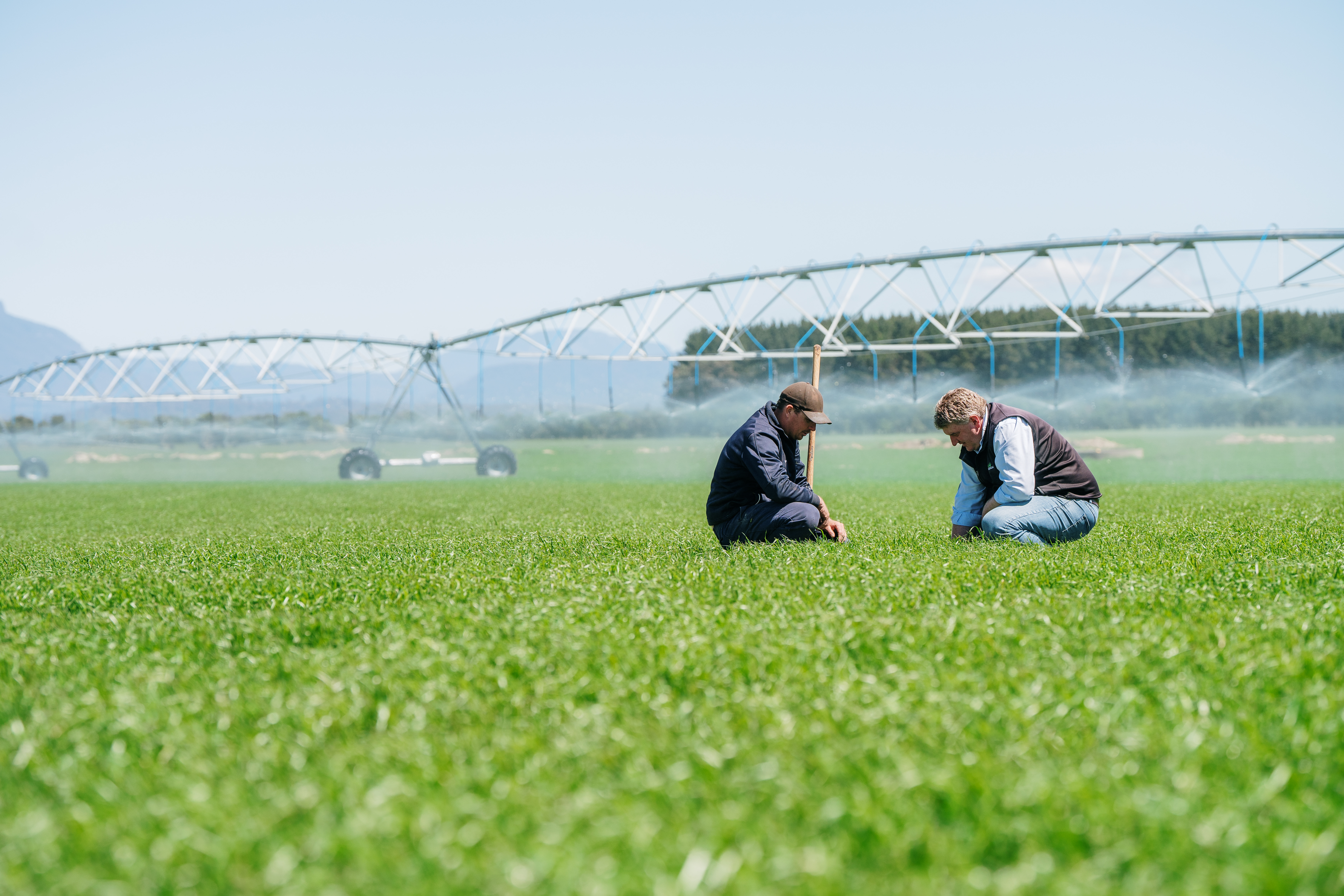
UMS is entering a new phase of growth, combining a refreshed national identity with increased investment in research and development resulting in exceptional results as published in the recent Dairy Australia forage value index (FVI).
The transition from Upper Murray Seeds to UMS reflects the scale and direction of the business today.
While the rebrand reflects the evolution of UMS to a national and international focused business, the foundations and local approach remain firmly grounded in technical expertise, customer relationships and practical pasture solutions.
The positioning statement ‘plant for success’ captures this approach, reinforcing a focus on performance-driven genetics supported by service and industry collaboration.
Central to the business’s strategy is ongoing investment in research and development at the UMS research station located in Cressy, Tasmania.
The station plays a key role in breeding new varieties under Australian conditions, enabling the UMS team to assess establishment, seasonal growth patterns, dry matter production and long-term persistence.
By integrating UMS led research programs with broader national trials including the pasture trial network, UMS continues to focus on developing and breeding varieties which respond to evolving farming systems and seasonal variability across the country.
Recent trial results underline the value of that investment.
UMS varieties Torpedo annual ryegrass and Allure Italian ryegrass have topped FVI tables across eastern Australian regions.
The FVI is a national variety ranking system built on data generated through multi-site independent pasture trials.
It assesses the potential economic value of perennial, Italian and annual ryegrass cultivars, providing a consistent benchmark for comparing varietal performance across differing environments and production systems.
Importantly, the FVI enables Australian farmers and their advisers to select pasture varieties based not just on yield, but on their expected contribution to farm profitability, taking into account seasonal feed supply and alignment with individual farming systems.
Both Torpedo and Allure were bred to maintain early season production but to specifically increase their winter growth.
This coupled with strong late season dry matter production has resulted in varieties that enable farmers flexibility in their decision making alongside extended grazing windows.
These traits reflect the growing emphasis on cultivars that provide early feed while maintaining consistent seasonal production.
“Our approach to research and development has always had the Australian farmer in mind and we believe Australian bred varieties are second to none when it comes to performance and resilience,” UMS general manager David Lockhart says.
“The success of Torpedo and Allure in FVI rankings highlights the strength of the work being done at our UMS research station and across our broader trial network,” he adds.
“With a strong focus on research, exceptional customer support and a clear national identity, UMS is well positioned to support agronomists and farmers to plant for success.”